

An echocardiogram is a non-invasive, real-time, ultrasound test that produces detailed images of the heart’s structures and functions. It can help in diagnosing a variety of heart conditions, including heart valve disorders, congenital heart defects, cardiomyopathy, and pericardial disease.
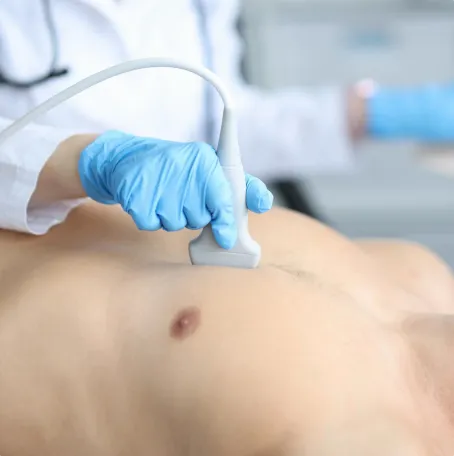

An echocardiogram, or ‘echo’, is a type of ultrasound scan for the heart. A small ultrasound probe is used to generate images of the heart and the surrounding blood vessels to find out how your heart is working, investigate symptoms, and diagnose and monitor heart conditions.
The most common type of echocardiogram uses sticky electrodes placed on your chest, and an ultrasound probe that is moved across your chest.
An echocardiogram is a type of ultrasound scan specially for the heart. It uses high frequency sound waves produced by a transducer (probe) that is moved across the skin of your chest. The sound waves bounce off the heart structures and echo back to the transducer. It records the echoes and uses them to create pictures of your heart on a screen. It is generally carried out either by a sonographer, cardiac physiologist, or cardiologist.
An Echocardiogram gives us detailed information on the function of the left and right sides of the heart. It has a vital role in the diagnosis of heart failure.
Reviews and assesses all heart valves. Diagnoses conditions
such as mitral regurgitation and aortic stenosis. Useful in the monitoring of any established valve disorders.
Heart muscle disorders such as hypertrophic cardiomyopathy, or dilated cardiomyopathy.
Conditions such as pericardial effusion (fluid around the heart), and pericarditis (inflammation of the lining of the heart).
Such as bicuspid aortic valve, or coarctation of the aorta.
Typical procedure duration
Typical result timeline
An echocardiogram (echo) is useful in detecting and assessing damage to the heart, along with any issues with its functionality, and abnormalities in shape and size. The images produced by an echo show the heart valves, heart walls, heart chambers, and how strong the heart is beating in real-time.
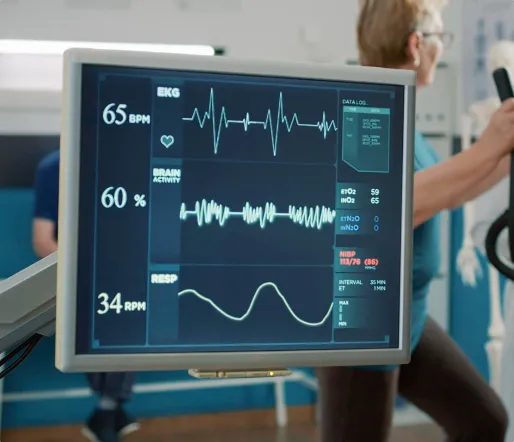
We will usually provide results within 7 working days of your scan. On the NHS, it can take around 4 weeks to receive your echocardiogram results.
The cost of ECG scans vary according to what part of the body or health concern is being investigated. Our prices start from £3,400 but to find out more about prices, please call 020 7123 4567.

Comprehensive, quick and private GP services for you.
Let’s answer your most common questions around Echocardiogram scans.
For more guidance and resources, visit our resources centre for articles and helpful guides on managing your own health.
No preparation is required before you have an echocardiogram.
About
Services
Contact